
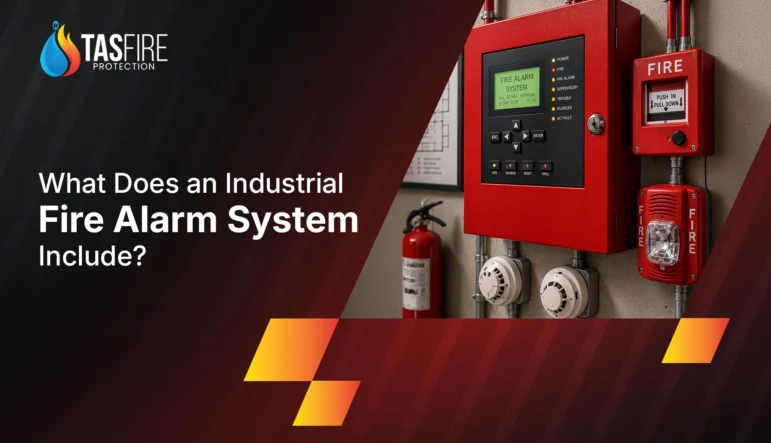
What Does an Industrial Fire Alarm System Include?
Industrial facilities can contain large production areas, machinery, storage spaces, electrical equipment, and other conditions that affect how a fire alarm system is designed. A properly designed system should detect a fire, process the alarm signal, and provide appropriate notification so that action can be taken.
An industrial fire alarm system consists of multiple components that work together to detect and respond to fire conditions. Depending on the facility and its fire protection requirements, these may include detection devices, a fire alarm control panel, manual pull stations, notification appliances, annunciator panels, and other system components.
So, what does an industrial fire alarm system actually include? This guide explains the main components, their functions, and how they work together.
What Is an Industrial Fire Alarm System?
An industrial fire alarm system is a coordinated system designed to detect a fire or other specified emergency condition within an industrial facility and provide an appropriate warning. It can include automatic detection devices, manual initiating devices, control equipment, notification appliances, and interfaces with other building systems. The exact configuration depends on the facility, its hazards, and the applicable fire alarm requirements.
How Is an Industrial Fire Alarm System Different?
The basic purpose of a fire alarm system remains the same across residential, commercial, and industrial properties. The difference is in the conditions the system must address.
Industrial facilities may contain:
- Manufacturing equipment and industrial machinery
- Large production or storage areas
- Combustible materials or other fire hazards
- Dust, heat, moisture, or corrosive environmental conditions
- Areas where standard detection methods may not be suitable
OSHA requires fire detection equipment to be selected and located based on factors such as the materials present, the area being protected, engineering surveys, manufacturer recommendations, and recognized testing laboratory listings. Equipment exposed to corrosive atmospheres or conditions that could cause physical damage must also be appropriately protected.
Why Do Industrial Facilities Need Specialized Fire Alarm Systems?
Industrial facilities can have different fire hazards and environmental conditions within the same property. A production area, warehouse, equipment room, and other occupied or unoccupied spaces may require different detection approaches.
A properly designed system considers factors such as:
- Fire hazards: The materials and processes present can influence the type of detection required.
- Environmental conditions: Heat, dust, moisture, and corrosive conditions can affect detector selection and installation.
- Building layout: Large or high-ceiling areas may require specific detector placement and coverage.
- Emergency notification: Notification appliances must provide appropriate warning to people who may be working in different areas of the facility.
- System interfaces: Depending on the design, the fire alarm system may interact with other building or emergency control functions.
NFPA 72 establishes requirements for fire alarm and signaling systems, including initiating devices, notification appliances, and emergency control interfaces.
The result is a fire alarm system designed around the specific industrial environment rather than a standard configuration used for every property.
Why Are Industrial Fire Alarm Systems Important?
- Early fire detection and timely alarm activation
- Faster emergency response
- Improved employee safety
- Protection of machinery and equipment
- Protection of inventory and other assets
- Reduced fire and smoke damage
- Reduced operational disruption
- Support for emergency evacuation procedures
How Does an Industrial Fire Alarm System Work?
An industrial fire alarm system works through a series of connected functions that detect a potential fire, process the signal, notify people in the facility, and support the required emergency response.
- Fire detection: Smoke, heat, flame, or other approved initiating devices detect a fire or specified condition.
- Signal transmission: The initiating device sends a signal to the fire alarm control panel for processing.
- Alarm activation: The control panel processes the signal and activates the required alarm outputs when an alarm condition is detected.
- Emergency notification: Audible and visible notification appliances alert people in the affected areas or throughout the facility, as required by the system design.
- System monitoring: The control panel supervises connected circuits and devices and indicates alarm, supervisory, or trouble conditions as applicable.
- Emergency response coordination: Fire alarm signals can support evacuation procedures and, where designed and permitted, initiate or control connected emergency functions.
Fire Alarm Codes and Standards for Industrial Facilities
Industrial fire alarm systems must be designed, installed, tested, and maintained according to the requirements that apply to the specific facility and location. Key requirements may include:
- NFPA 72: National Fire Alarm and Signalling Code covering fire alarm and signalling system functions, including initiating devices, notification appliances, and related system requirements.
- NFPA 70: National Electrical Code providing electrical installation requirements relevant to fire alarm system wiring, equipment, and power supplies.
- OSHA requirements: OSHA requirements address workplace fire detection and employee alarm systems, including equipment approval, maintenance, testing, detector protection, and warning for emergency action and safe employee escape.
- Local fire and building codes: State and local authorities may impose additional requirements for fire alarm system design, installation, permitting, inspection, and acceptance.
- Facility-specific requirements: The applicable requirements can also depend on the building type, occupancy, fire hazards, processes, and other conditions within the facility.
How to Choose the Right Industrial Fire Alarm System
Choosing an industrial fire alarm system requires consideration of the facility’s fire hazards, layout, operating conditions, and applicable requirements. Key factors include:
Proper System Design
The system should be designed around the facility’s specific fire hazards, building layout, environmental conditions, and operational requirements. Detection devices and other components should be selected and positioned for the areas they are intended to protect.
Compliance With NFPA Standards
The system should be designed and installed according to the NFPA standards that apply to the project, including NFPA 72 and relevant provisions of NFPA 70. Applicable state and local fire and building codes must also be considered.
Reliable System Performance
Components should be appropriately listed or approved for their intended application and installed according to manufacturer requirements. Regular inspection, testing, and maintenance help identify faults and keep the system in proper operating condition.
Long-Term Safety & Protection
A suitable system should support the facility’s fire safety procedures throughout its service life. Ongoing maintenance, testing, repairs, and periodic evaluation help ensure the system continues to perform as intended.
Why Choose TAS Fire for Industrial Fire Alarm Systems?
We provide fire alarm installation, inspection, testing, maintenance, and monitoring services for industrial and other properties
- Trained and certified technicians: Our fire alarm inspections are performed by trained and certified technicians with experience working with industrial fire protection systems.
- NFPA-aligned services: Inspections and testing are carried out in accordance with applicable NFPA standards, including NFPA 72 requirements for fire alarm systems.
- Installation and maintenance: We provide fire alarm installation, inspection, testing, and ongoing maintenance to help industrial properties keep their systems in working condition.
- Inspection and testing: Periodic inspection services are available on monthly, quarterly, semi-annual, and annual schedules, depending on the system and applicable requirements.
- 24/7 monitoring and response: 24/7 alarm monitoring and around-the-clock support help ensure that fire alarm concerns can be addressed when they arise.
Frequently Asked Questions
How does an industrial fire alarm system work?
An industrial fire alarm system uses detection and initiating devices to identify a fire or other specified condition, sends the signal to the fire alarm control panel, and activates the required notification appliances. Depending on the system design, it may also send signals to a monitoring service or interface with other building systems.
Can fire alarm systems integrate with sprinkler systems?
Yes. A fire alarm system can interface with an automatic sprinkler system. Waterflow and supervisory devices associated with the sprinkler system can provide signals to the fire alarm system, allowing the system to indicate an alarm or supervisory condition as applicable.
How long do industrial fire alarm systems last?
There is no single fixed service life for every industrial fire alarm system. The useful life depends on the equipment, environmental conditions, maintenance, manufacturer support, and changes to the facility or applicable requirements. Individual components may need to be repaired or replaced before the entire system requires replacement.
Can a New Fire Alarm System Be Installed During a Building Renovation?
Yes. A fire alarm system can be installed as part of a building renovation when the project design and applicable codes require or permit it. Renovation is also an opportunity to evaluate whether an existing system can accommodate changes to the building layout, occupancy, use, or fire protection requirements.
How often should an industrial fire alarm system be inspected?
Inspection and testing frequency depends on the applicable requirements and the type of fire alarm system. NFPA 72 establishes inspection, testing, and maintenance requirements for fire alarm and signaling systems, while additional requirements may apply based on the facility, local codes, and the authority having jurisdiction.