
Fire Extinguisher Safety Tips
 Fire safety is one of the most important aspects of any house or place of work. Knowledge of how to use a fire extinguisher might be the difference between a simple accident and a disastrous fire. Though they are simple and easy to use, improper handling of fire extinguishers usually renders them ineffective or may even cause injury. This guide will encompass all the vital safety tips regarding fire extinguishers, their types and classes, how to use them, how to maintain them, and some frequently asked questions.
Fire Extinguisher Types and Classes
Understanding the type of fire extinguisher very well is very critical for safety in case of fire. Since not all fires are the same, it is possible that using an inappropriate fire extinguisher will not only be ineffectual but may also promote fire. Fire extinguishers fall into specific classes based on incendiary materials.
Class A — Ordinary Combustibles
- The extinguishers are used to fight fires involving wood, paper, cloth, rubber, and plastics. Fire extinguishers like these are made available around homes, offices, and schools. The Common extinguishing agents used in Class A extinguishers include water or foam that cools the burning surface and thereby prevents reignition.
Class B — Flammable Liquids
- Class B extinguishers are required for fires involving flammable liquids such as gasoline, oil, grease, alcohol, or paint. Class B extinguishers are designed to fight flammable liquid fires when water should not be used since it may spread rather than extinguish the fire. By using foam, dry chemicals, or carbon dioxide (CO2), these agents take out the necessary oxygen and prevent the vapours from igniting.
Class C — Electrical Fires
- These are the extinguishers used on electrically started fires, such as those occurring in appliances, circuit breakers, wiring, and power tools. Water-based extinguishers should never be used on electrical fires due to the risk of electrocution. The safer option would be to use extinguishers that do not conduct electricity, such as CO2 or dry chemical extinguishers.
Class D — Combustible Metals
- These extinguishers are needed in industrial environments where substances like magnesium, titanium, sodium, and potassium are present. Such metals will react dangerously with conventional extinguishing agents; therefore, specialized dry powders, such as sodium chloride or graphite, are needed to smother the flames.
Class K — Kitchen Fires
- Class K fires involve cooking oils, animal fats, and grease. These extinguishers are commonly seen in commercial kitchens. With the wet chemical agents, some extinguishers cool the fire, while others create foam barriers for prevention against re-ignition. Do not use water on grease fires as it would cause the flames to spread quickly.
Multipurpose ABC Fire Extinguishers
Most of the extinguishers that could be found in homes and businesses are ABC type, capable of fighting structure fires of Class A, B, and C. These will be your best option for general use, as they cover the most common fire hazards. But if you are working in a specialized environment like a kitchen or a factory, you might be required to use an extinguisher that is designed for a specific fire class.
Fire Extinguisher Location and Placement
Where an extinguisher is placed matters as much as which one you choose. A hidden or distant unit will not help in the first seconds of a fire. Follow these placement basics, and confirm exact requirements with your local fire authority and NFPA 10.
- Visible and accessible: Place extinguishers along normal exit paths, near exits, and on every floor. Keep them clear of boxes and furniture, with operating instructions facing outward.
- Travel distance: Employees should be within 75 feet of an extinguisher in Class A areas and within 50 feet in Class B areas. Class K extinguishers must be within 30 feet of cooking hazards.
- Mounting height: Units weighing 40 pounds or less should be mounted with the handle no higher than 5 feet from the floor, and heavier units no higher than 3.5 feet. Leave at least 4 inches between the bottom of the unit and the floor.
- Kitchens: Keep a Class K extinguisher near cooking equipment, along the exit path, not right beside the stove or fryer.
- Electrical rooms: Use a Class C-rated extinguisher mounted just outside the room near the entrance.
Using Fire Extinguishers
It is important to know both how and when to use a fire extinguisher. Fire extinguishers are intended for small, manageable fires. If the fire is spreading rapidly, producing thick smoke, or spreading to two or more areas, do not try to put it out yourself. Just leave that building and call emergency services immediately.
When One Should Consider Using a Fire Extinguisher
Use an extinguisher only if:
- The fire is small and confined to one particular area.
- There exists a clear means of escape for you in case the fire spreads.
- You are familiar with operating the fire extinguisher.
- The fire department is called, or someone is calling for help.
When One Should Not Use a Fire Extinguisher
- If the fire is too big or spreading quickly.
- If there is thick smoke present, visibility is reduced and fumes make it difficult to breathe.
- If you are not familiar with a specific fire extinguisher type.
- If you do not have a clear exit route.
How to Use Fire Extinguishers – By the PASS Technique
For effective fire extinguisher operation, the PASS procedure is the standard:
- Pull – Pull out the pin from the canister to break the tamper seal.
- Aim – Aim the nozzle at the base of the fire, not the flames. Aiming at the flames will not put it out.
- Squeeze – Squeeze the handle to discharge the extinguishing agent; release to stop.
- Sweep – Sweep the nozzle from side to side, covering the entire fire source. Continue until the fire is extinguished.
If the fire returns, either go through the process again or leave if it is out of control.
Safety Tips
Using an extinguisher correctly can save a life. But safety tips for fire extinguishers are as good as any. A few essential precautions to remember are as follows:
Have an Escape Route in Place
Before you fight a fire with an extinguisher, assess the escape route. Since it’s impossible to predict how rapid or ferocious the flames may develop, if the extinguisher fails to put out the fire, you should be able to evacuate safely.
Use the Right Extinguishers
A small fire extinguisher for household use will not be suitable for larger fires in commercial or industrial premises. Make sure that you have the proper fire extinguisher for your surroundings.
Place Extinguishers from Where They Can Be Reached Easily
Extinguishers should be placed in locations that will be quickly accessible, such as kitchens, garages, work areas, and near exits. Don’t put them in cabinets or behind furniture because quick accessibility in an emergency is important.
Use the Pressure Gauge
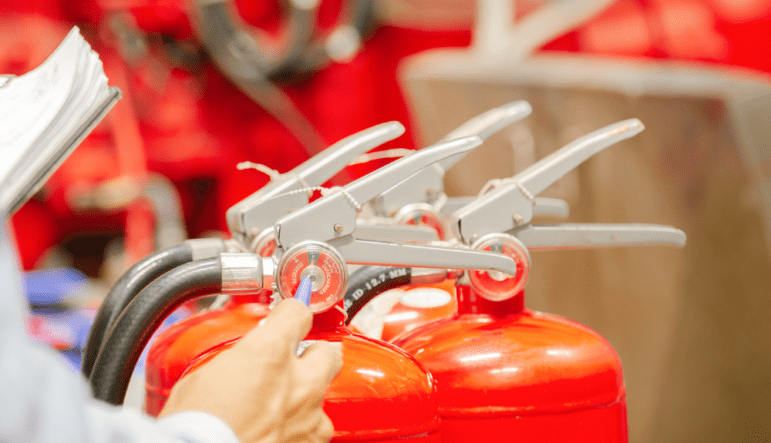
Pressure gauges tell if a fire extinguisher is fully charged and in good working order. If an extinguisher becomes empty or has passed its expiration date, it is useless; thus, regular inspection is required.
Never Ever Use Water on Electrical or Grease Fires
Using water near electrical fires might cause serious injury and spread grease fires instead of extinguishing them. Always employ the type of fire extinguisher appropriate for the kind of fire.
Maintain a Safe Distance
Keep a distance of a good six to eight feet away from the fire. While using a fire extinguisher, if the flames suddenly flare up, you can likely control the burning before it can spread.
Valuable Tips for Fire Extinguisher Maintenance
An operational and functioning fire extinguisher is indeed what is needed in an emergency. Just like other appliances, it should be kept in good tested working order. Keep the following guidelines on fire and extinguisher maintenance in mind:
Check Monthly
- That the extinguisher is in its designated place.
- The pressure gauge indicator is in the green zone.
- The safety pin is intact; no bent or broken.
- The nozzle and hose are free of obstructions.
Shake Dry Chemical Extinguishers
If you have dry chemical fire extinguishers – just shake them once every month. If you are unwilling to shake the extinguishers monthly, we encourage you to check their operational status through internal force exploration.
Schedule Professional Servicing
Make sure there is a properly trained technician to inspect and service your fire extinguishers once a year. Annual servicing includes checking the pressure and topping them up or recharging them if necessary, besides examining them for leaks.
Keep Records of Inspections
The log provides a way for quick checks of fire extinguishers and works well for inspection, filling, and replacement. It would also address any compliance issues with fire safety regulations.
Replace Expired Units
Fire extinguishers do not last for direct usage over time. Some may have fixed lives ranging from 5 to 15 years. Check the manufacturer’s expiration date and replace as required.
Frequently Asked Question
Which Type of Fire Extinguisher Is Best for Home and Office Use?
A multipurpose ABC extinguisher is the usual choice because it covers ordinary combustibles, flammable liquids, and electrical fires. Choose a size you can lift and handle comfortably, and place it where it is easy to reach. Commercial kitchens need a Class K extinguisher near the cooking equipment, and specialized spaces may need class-specific units.
Can You Use Water on Electrical or Grease Fires?
No. Water can cause electric shock on electrical fires and can spread burning grease. Use an extinguisher rated for the fire, such as Class C for electrical equipment and Class K or B for grease and cooking oil, depending on the setting. If you cannot put the fire out safely, leave and call emergency services.
How Often Should Fire Extinguishers Be Inspected and Maintained?
Inspect them visually every month and have a trained professional service them once a year. Stored-pressure dry chemical (ABC) units also need internal maintenance every 6 years and hydrostatic testing every 12 years, while CO2 units are tested every 5 years. Check your label and local fire authority for exact intervals.
When Should a Fire Extinguisher Be Replaced?
Replace an extinguisher if it is damaged, corroded, leaking, or fails inspection or testing, or if it has reached the end of its service life. Some nonrechargeable dry chemical units must be removed from service 12 years after manufacture. Any unit that has been used should be recharged by a technician or replaced.
We Provide Fire Extinguisher Services
Having fire extinguishers in place implies you are prepared to face the worst-case scenario, like an unfortunate fire emergency that occurs on your premises. Making certain that your fire extinguishers are serviced regularly is vital to keep the extinguisher safe and functional every time and to extend its lifespan.
> Learn More
One cannot simply get a fire extinguisher and hope for the best. You should know how to use it and how to properly maintain it. Through understanding the classes of fire extinguishers, application of safety tips, and maintenance, you can properly prepare for any unexpected fire emergency. Safety comes before everything else, and when in doubt, evacuate the area and call for help.
Contact Us (905-870-7779) for a Free Consultation!
—

About TAS Fire Protection
TAS Fire Protection offers comprehensive and cutting-edge fire protection and security services to commercial, industrial, and high-rise properties. Our team of highly skilled professionals has years of experience in installing, maintaining, and inspecting fire alarm systems, fire sprinkler systems, fire extinguishers, fire hydrants, security alarm systems, and more. We understand that fire safety and security is essential to the protection of lives and property.
> Learn More