Fire Hose Inspections for Commercial Buildings: What Gets Checked and How Often
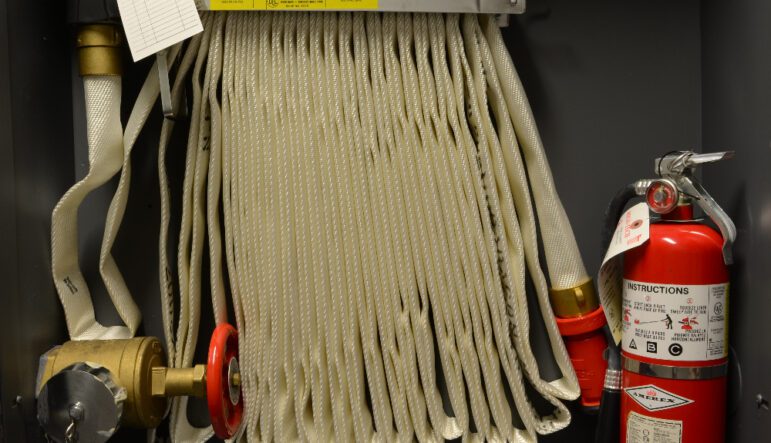
If a fire breaks out in your building, the hose and cabinet are what responders and trained occupants rely on to deliver water to the fire. A fire hose inspection confirms that the hose, couplings, nozzle, valve and cabinet will work when called on. In short, a professional inspection covers hose condition, couplings and gaskets, nozzles and valves, cabinets and access, and pressure (service) testing, backed by proper records.
This guide explains what is checked, how often, and what commercial property owners in South Florida should expect from a hose inspection.
Hose Inspection vs. Hose Certification
These two terms are often mixed up, so it helps to separate them.
- Certification or listing is done by the manufacturer and testing laboratories. It shows that a new hose was designed and built to meet a standard.
- Inspection and service testing are done on your property, year after year. They show that the hose in your cabinet is still in good condition and can hold pressure after months or years in storage.
A hose can be listed and certified when it is new and still fail in the field because of age, heat, mildew, abrasion or poor storage. That is why inspection and testing matter.
Which Standards Apply?
Two NFPA documents are the main references for hose in commercial buildings:
- NFPA 25 covers inspection, testing and maintenance of water-based fire protection systems, including standpipe and hose systems.
- NFPA 1962 covers the care, use, inspection, service testing and replacement of fire hose, couplings and nozzles.
In Florida, these are applied through the Florida Fire Prevention Code and enforced by your local fire marshal or authority having jurisdiction (AHJ). Always confirm the exact requirements and intervals with your AHJ and insurer.
What Is Checked During a Fire Hose Inspection
1. Hose Condition
The hose is removed from the rack or reel and examined along its full length.
- Cuts, abrasions, cracks and worn spots
- Mildew, rot and stains from moisture
- Heat damage, chemical damage or paint overspray
- Kinks, crushed areas and permanent fold creases
- Hose that looks stiff, sticky or deteriorated
2. Couplings and Gaskets
- Threads that are clean, undamaged and able to connect smoothly
- Couplings that are secure and free of dents, corrosion and cracks
- Swivels that turn freely
- Gaskets that are present, flexible and not cracked or flattened
3. Nozzles and Hose Valves
- Nozzle shut-off that operates smoothly and fully
- Spray pattern controls that move through their range
- Hose connection valves that open and close without binding or leaking
- Valve caps and handwheels that are present and in good condition
4. Cabinets, Racks and Access
- Cabinets that open easily and are not locked, blocked or used for storage
- Signage and markings that are visible and correct
- Racks or reels that are secure and hold the hose properly
- Hose that is correctly folded and re-racked, with fold points moved over time to reduce wear
- Clear access in front of the cabinet
5. Service (Pressure) Testing
Hoses are not tested for “flow rate.” They are service tested, usually with a hydrostatic pressure test, to confirm they will not leak or burst under pressure.
- The hose is connected to a test setup and pressurized to the level specified by the standard.
- Inspectors check for leaks, bulges, coupling slippage and any other signs of failure.
- The hose is drained and dried properly after testing.
- Hose that fails is removed from service and replaced.
Note that the standpipe system supplying the hose is tested separately. Flow and pressure testing of the standpipe itself follows a different schedule, so ask your technician to explain which tests apply to your building.
Fire Hose Inspection Checklist
| Area | What is checked | Pass criteria |
|---|---|---|
| Hose jacket and liner | Cuts, abrasion, mildew, heat or chemical damage | No damage that affects strength |
| Folds and kinks | Crushed or creased sections | Hose lays flat and unfolds freely |
| Couplings | Threads, dents, corrosion, swivel | Connects smoothly and turns freely |
| Gaskets | Present and flexible | No cracks or flat spots |
| Nozzle | Shut-off and pattern control | Operates through full range |
| Hose valve | Handwheel, cap, leaks | Opens and closes without binding |
| Cabinet or rack | Access, signs, storage | Clear, labeled and unlocked |
| Service test | Hydrostatic pressure test | No leaks, bulges or coupling failure |
| Records | Tags, dates and report | Complete and filed |
How Often Should Fire Hose Be Inspected and Tested?
Intervals depend on the type of hose, the edition of the code your jurisdiction uses, and your AHJ. As a general guide for commercial buildings:
| Task | Typical frequency |
|---|---|
| Quick visual check by building staff | Monthly (cabinets accessible, hose present, nothing blocked) |
| Full professional inspection | At least annually |
| Hose service (hydrostatic) test | Commonly at 5 years of service, then every 3 years |
| Replacement | When hose fails a test, is damaged, or reaches the manufacturer’s service life |
Schedule an extra inspection after a fire, after any use of the hose, after a flood or water leak in the cabinet, or after the hose has been exposed to heat or chemicals.
Common Problems Found During Hose Inspections
- Hose stored wet, causing mildew and rot
- Hose folded in the same place for years until the jacket cracks
- Missing or damaged gaskets
- Nozzles that are seized or will not shut off
- Stuck or leaking hose valves
- Cabinets blocked by boxes, furniture or equipment
- Missing, faded or incorrect signage
- Hose past its service life with no test tag or date
Records and Tagging
A proper inspection ends with documentation. Your report should list each hose location, condition found, tests performed, repairs and replacements, and the date of the next service. Tags on the hose or cabinet help fire marshals and insurers see at a glance that the equipment is current. Keep copies for as long as your AHJ and insurer require.
Need Your Fire Hoses Inspected and Tested?
Hose that hasn’t been checked in years can fail the moment you need it. TAS Fire Protection’s licensed technicians inspect hose, couplings, nozzles, valves and cabinets, perform hydrostatic service testing, and give you a clear report for your fire marshal or insurer. We serve commercial, industrial and high-rise properties across Greater Fort Lauderdale, Broward County and Collier County. Schedule Your Fire Hose Inspection now
In the high-stakes world of commercial fire safety, the importance of fire hose inspections cannot be overstated. By ensuring your fire hoses are certified, properly maintained, and ready to perform, you are taking a proactive step in safeguarding your business, your assets, and most importantly, the lives of everyone who enters your commercial property.
Contact Us (905-870-7779) for a Free Consultation!
Frequently Asked Questions
Do commercial buildings need fire hoses?
It depends on the building type, height and occupancy. Many commercial buildings have standpipe systems with hose connections or cabinets. Your local code and fire marshal determine what is required.
What is the difference between a standpipe hose and a fire department hose?
Standpipe or occupant hose is stored in cabinets in buildings for use by trained occupants or responders. Fire department attack and supply hose is carried on apparatus and tested under NFPA 1962 on its own schedule.
Can my maintenance staff inspect hoses?
Staff can do monthly visual checks, such as making sure cabinets are clear, signs are visible and the hose is present. Annual inspections and pressure testing should be performed by qualified technicians.
What happens if a hose fails the test?
It is removed from service, tagged and replaced. The failure and replacement are recorded in your inspection report.
How long does a fire hose last?
Service life depends on the hose type, storage conditions and use. Follow the manufacturer’s guidance and replace hose that fails testing or shows damage, regardless of age.
—
About TAS Fire Protection
TAS Fire Protection offers comprehensive and cutting-edge fire protection and security services to commercial, industrial, and high-rise properties. Our team of highly skilled professionals has years of experience in installing, maintaining, and inspecting fire alarm systems, fire sprinkler systems, fire extinguishers, fire hydrants, security alarm systems, and more. We understand that fire safety and security is essential to the protection of lives and property.
> Learn More